★★★★
Here are photos after the thread lifting and Ultherapy procedures. The thread lifting showed immediate results haha. The accessibility is good, and they take great care of the procedure.
 지인김3 weeks ago · Translated by Google
Seomyeon, Busan · Aesthetic skin and laser clinic

At Barog Clinic in Seomyeon, Busan, pico laser toning shatters pigment into fine debris your skin clears over a course of visits at 2 to 4 week intervals; how many sessions depends on whether the pigment is shallow (freckles, sun spots) or deep and stubborn (melasma). Each session runs about 10 to 20 minutes with little downtime, and per-session prices sit on the board on this page. Strict sun protection afterward is not optional: skip it and the pigment tends to come back.
A pico laser does not erase a spot in one pass. Its picosecond pulse shatters pigment into finer particles your skin then clears, so the real story is sessions and sun protection, not a single visit. The consultation starts by sorting which pigment you have; a single treatment runs about 10 to 20 minutes with little downtime.
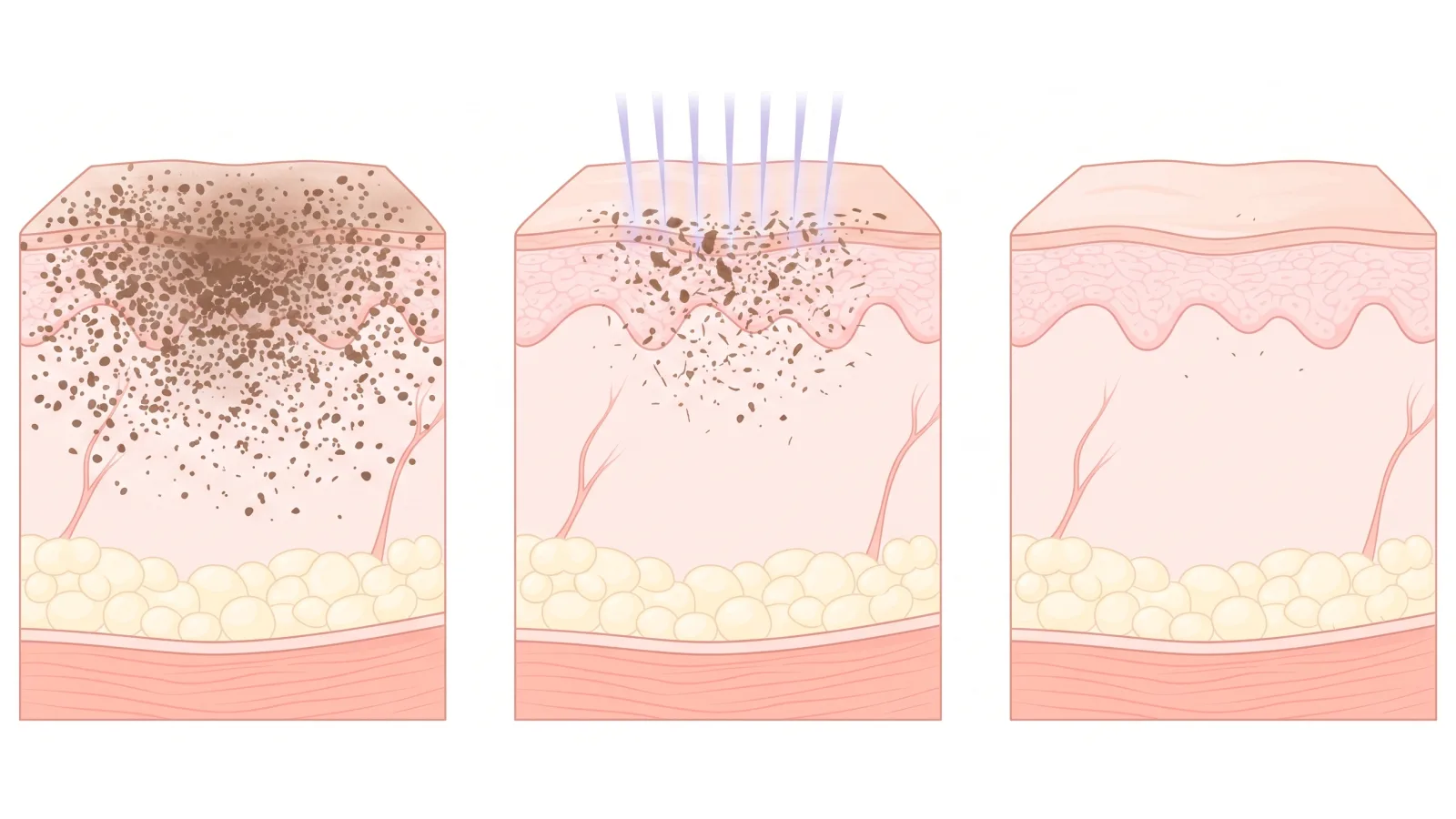
Pico laser toningShort laser pulses break pigment in the upper layers of the skin into fine particles, so the pigment becomes less visible.
Illustration for explanation only. Results differ from person to person.The consultation starts by sorting which pigment you have, since that drives the wavelength, energy and number of sessions. These are the situations it suits, and the ones that call for a pause first.
A pico laser does not erase a spot in one pass; the treatment runs as a course.
Your doctor
Director · Filler & contouring lead
Three physicians. One standard.KMLE licence no. 127092. Restylane Expert Member, Belotero and Byryzn Key Doctor.
To understand a pico laser, start with what separates it from older toning lasers. Traditional lasers work largely through heat, which can scorch the tissue around a target. A pico laser fires pulses only picoseconds wide, a trillionth of a second, so the energy acts on pigment more by a photomechanical shock than by cooking it: large melanin clumps are broken into finer debris, with less collateral heat, and the skin's own clearance system then carries that debris away over time. That whole idea, hitting the pigment target while sparing what is next to it, traces back to the 1983 selective photothermolysis paper that still frames how these lasers are designed.
Because clearing debris takes time, the treatment has to run as a course, and cannot clear a spot in one shot. Which pigment you have, and how deep it sits, drives the wavelength and energy chosen: shallow freckles and sun spots usually respond faster, while deep, blurry-edged melasma calls for a more conservative, lower-energy approach. So the first step here is always sorting which category your pigment falls into, not switching the machine on.
International patients often arrive asking for a specific device by name, a "super pico", or comparing it to a Q-switched laser they read about. The shorter a pulse and the higher its peak power, the finer it can fracture pigment in theory, and comparative work such as split-face studies of picosecond versus Q-switched systems has looked at exactly that. But for most everyday pigment, the result turns on whether the pigment was sorted correctly and whether the energy was kept restrained, far more than on the model badge. What you will hear at consultation is which setting is being used and why, mapped to your skin, never a pitch built around a device name.
Many people are startled after a first pico toning session: the spot has not lightened, it looks darker, sometimes with tiny scabs. On shallow pigment this is a common, expected phase. The shattered pigment is pushed toward the surface, goes through a stretch of looking darker, then flakes away and fades as the skin turns over, usually across several days to a week or two. Saying this out loud in advance matters, so no one quits mid-course or reads "it got darker" as failure.
One kind of darkening does need separating out, though. Melasma itself is prone to being provoked by energy that is too strong, and can flare or even temporarily worsen. That is why melasma is treated especially conservatively here, choosing slower progress over an aggressive setting. Cadence for pico toning, when it applies, is generally a course of about 5 to 10 sessions spaced 2 to 4 weeks apart, adjusted to the pigment and the skin's response; the exact number is not fixed in advance. It is also worth naming who should wait: recent heavy tanning or sunbed use, photosensitizing medication, an active infection or inflammation in the treatment area, and a keloid tendency all call for a pause or a careful discussion first. Pregnancy is generally deferred to a consult as well.
With pigment lasers the danger is rarely too weak a setting, it is too much energy. Push a pico laser hard to force a fast result and you raise the risk of post-inflammatory hyperpigmentation, the rebound darkening that pigment-prone skin is exactly wired for. The clinic's discipline runs the other way: start on the conservative side, adjust to how your skin reacts each visit, so the energy is set by the doctor doing the treatment, never left to a fixed machine preset. The clinic keeps 12 skin and laser devices in its stack, so pigment, vascular, and texture problems each map to the device built for them, instead of one machine forced to do everything.
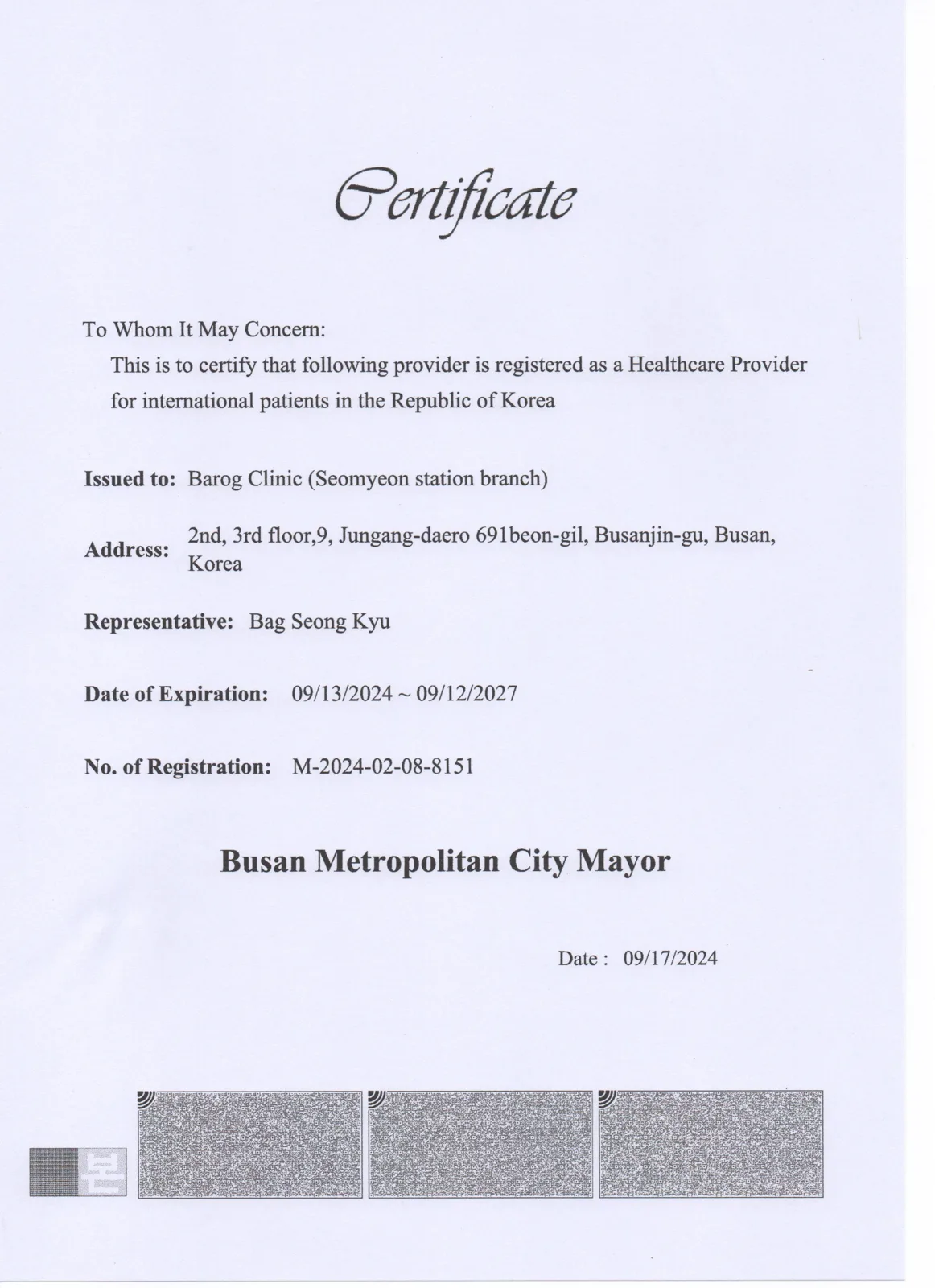
Sixteen authenticity certificates from injectable and device manufacturers are displayed on site and can be checked one by one at the clinic. Barog Clinic is registered with KHIDI to receive international patients, and the English registration certificate is displayed on site. English-speaking coordinators, in-house staff and not an outside agency, carry the conversation from pre-visit questions through the course, so energy, session count, and sun-protection planning can all be settled before you arrive.
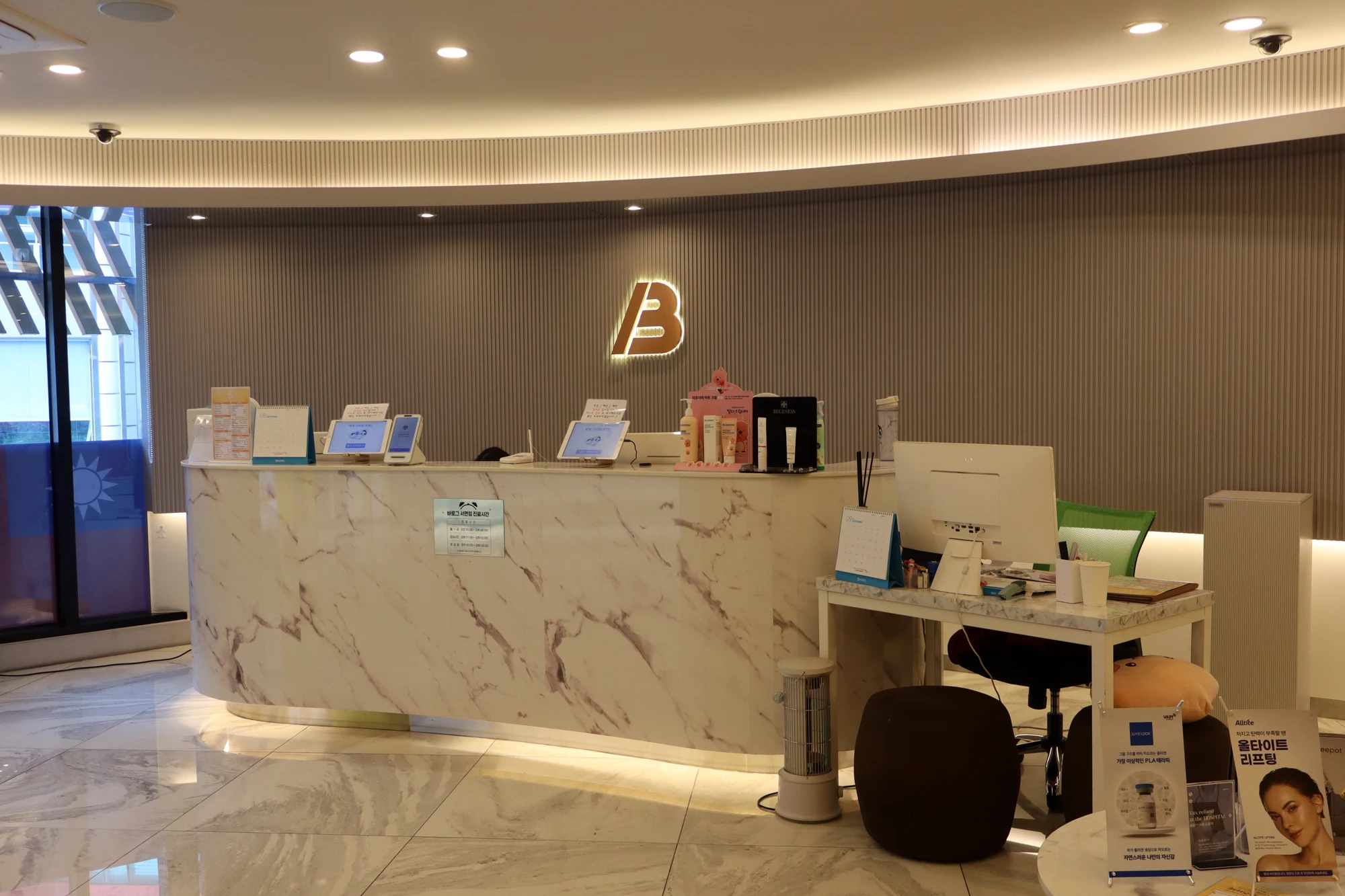
Pico toning slots into travel unusually well: a single session runs about 10 to 20 minutes with little downtime, so you can walk straight back into the Seomyeon shopping district afterward. The clinic sits about a two-minute walk from Seomyeon Station, where Busan's two main subway lines cross, at 9 Jungang-daero 691beon-gil, Busanjin-gu. Weekday hours run 10:00 to 20:00, so a late-arriving flight can still book an evening slot; Saturday runs 10:00 to 16:00 and the clinic closes on Sundays. Because pigment work is a course, a short trip is better treated as a start, with the remaining sessions planned once you are home.
The single most important line in any Korea pigment-removal plan, though, is that aftercare sun protection is not optional. Travel usually means more sun exposure, and if you go slack on protection after a pico session the pigment rebounds easily, undoing the work. So even while you keep enjoying Busan or Jeju, follow the aftercare and stay out of strong sun. Shallow pigment may run through a few days of looking darker and forming fine scabs, which usually does not affect flying; recovery and any follow-up sessions can be tracked by sending photos to the coordinators after you return.
The doctor first works out which pigment you have, shallow freckles and sun spots or deeper, blurry-edged melasma, and from that decides the wavelength, how restrained the energy should be, and a rough range of sessions to expect.
After makeup removal and cleansing, treatment usually starts without numbing; for sensitive skin or noticeable discomfort a topical numbing cream can be added. A first pass often runs at lower energy over a small area to read the skin's reaction before going further, so the pigment is not hit too hard at the outset.
Picosecond pulses fracture the pigment into finer debris, worked zone by zone across the areas being treated. The pass itself takes about 10 to 20 minutes, and the doctor fine-tunes the energy in real time to keep the rebound-darkening risk down.
A short cooling finishes the visit and you can head back to your day. Because pigment clearance is tied directly to sun protection, the aftercare and sun-protection points are walked through one by one, and the interval and booking for your next session can be arranged with the coordinators.
Pico toning is a course-based treatment, so the board lists a single-session figure; how many sessions you actually need is decided by your pigment type, not sold as a fixed package up front. The same board applies to local and international patients alike. Confirm the per-session price and the suggested session range before the first pass.
Pico toning, per single session
Session count decided by pigment type at consultation
from₩39,000excluding VAT (10% VAT is added at payment)Book NowSame price for international patients · Availability confirmed at consultation
Prices from the clinic's official boards, VAT excluded. Same price for international patients. Event items are this month's (October 2026) — new board every month. Availability confirmed at consultation.
The pass takes about 10 to 20 minutes, then a short cooling and you can head back to your day.
Shallow pigment may look darker with fine scabs, then flakes away and fades.
Strict sun protection is not optional; skip it and the pigment tends to come back.
Sessions are spaced 2 to 4 weeks apart, adjusted to the pigment and the skin's response.
A common, expected phase on shallow pigment, explained in advance so no one reads it as failure.
Too much energy raises the risk, so treatment starts on the conservative side and a first low-energy pass reads the skin's reaction.
Melasma can be provoked by energy that is too strong, so it is treated especially conservatively.
Going slack on sun protection after a session lets pigment rebound easily.
Treatment usually starts without numbing; a topical numbing cream can be added for sensitive skin.
Four published studies anchor how this page describes the treatment class. They are context; the research is on the technology, and outcomes vary with pigment type, device, and the individual.
These citations describe picosecond laser treatment as a treatment class, including its mechanism and evidence limits. Individual results at any clinic differ with pigment type, device, and skin response.
Here are photos after the thread lifting and Ultherapy procedures. The thread lifting showed immediate results haha. The accessibility is good, and they take great care of the procedure.
지인김3 weeks ago · Translated by GoogleI visit this clinic at least once a month these days because I'm going through a skin slump. The biggest advantage is that you can get treatment right away without an appointment! As someone with an unpredictable schedule, I consider this…
 츄A month ago · Translated by Google
Great location! Plus, there's hardly any waiting time, and everything is done quickly and efficiently, which is great because it saves me time compared to how often I used to spend at clinics! I've given it 5 stars because I'm hoping for…
 belle3 weeks ago · Translated by Google
Director Park Sung-kyu is meticulous and has great taste in his procedures, so I trust him completely and always entrust my face only to Barogeu Clinic Seomyeon Branch. I will definitely recommend the Seomyeon Branch to my family and…
 박현희In the last week · Translated by Google
院長さんがすごく優しくて手早いので安心して施術をもらいました❤️カウンセリングも無理なアップセルなしで行ったので、希望の施術だけもらうことが可能でした😆また次回来院します🍀
 하주희A week ago · Original in Japanese
Verified reviews from our Google Business Profile — the rating and count refresh daily.
Message the clinic with a photo of the pigment you want treated and the team can give a first read on whether it is shallow pigment or the melasma type, and roughly how many sessions to expect. The per-session price is confirmed on the board and at consultation.
Leave your contact — our coordinator replies as soon as possible.
Related skin work: dual toning to manage pigment and redness together, rejuran skin regeneration, or plan it alongside lip filler in the same trip. · All skin · Skin booster
Registered with KHIDI as a medical institution for international patients; English registration certificate displayed at the clinic.